
Reading the Solana Chain: Practical Guide to Transactions, Analytics, and Explorers
Okay, so check this out—I've been poking around Solana explorers for years. Really. My first impression was: fast, flashy, and a little overwhelming. Whoa! But once you dig in, the raw data starts to tell a story about activity, risk, and value flows. Initially I thought it was just block hashes and token transfers, but then I realized the real power lies in pattern recognition across transactions and program interactions.
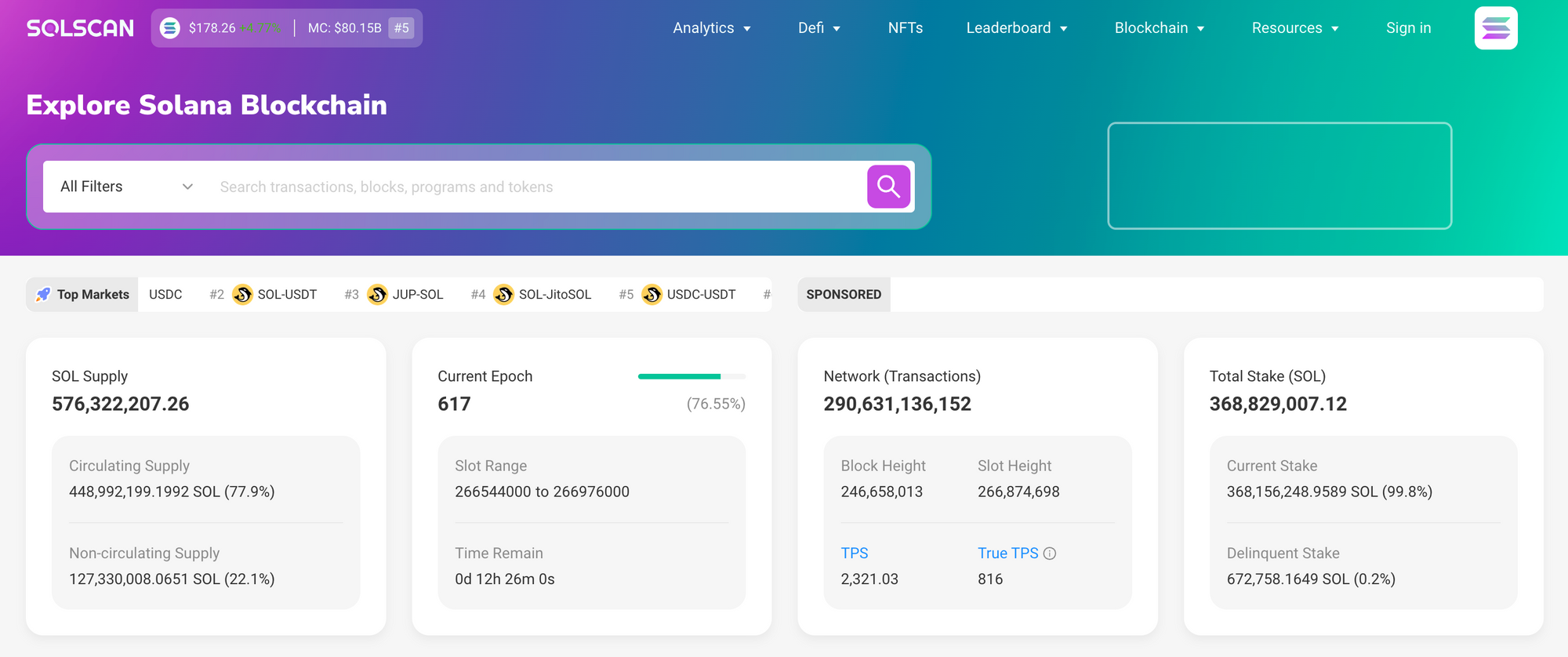
Here's the thing. Solana moves quickly. Transactions confirm in fractions of a second and the ecosystem is full of specialized programs that do very different things. That speed is great, though it can hide subtle patterns—front-running attempts, repeated failed transactions, batch swaps—that matter a lot if you're analyzing behavior or troubleshooting a wallet. My instinct said: check a detailed explorer, not just a summary page. So I default to a tool that lets me drill into inner instructions, account states, and historical charts, and I often use solscan for that.
Why a blockchain explorer matters beyond "who sent how much"
Most people open an explorer to verify a transfer. Sure. But explorers do much more. They decode program instructions, show account balances over time, list token holders, and surface on-chain events that wallets and dapps rely on. Seriously? Yes. You can detect repeated failed instructions, analyze fee patterns across clusters, and trace token minting paths for NFTs.
For example, when an SPL token transfer looks suspicious, a good explorer helps: you can inspect the transaction's inner instructions, check which programs were invoked, and see post-transaction account states. On one hand that requires some on-chain literacy. On the other hand, the right explorer builds that literacy by translating binary instruction data into readable operations.
How to read a Solana transaction like a pro
Step 1: Start with the header. Note the slot, block time, and signature. Those are your anchor points. Step 2: Look at status—success or failure—and if failed, read the error. Somethin' as small as a nonce mismatch or exceeded compute budget can cause failure. Step 3: Expand "inner instructions." These show program-to-program calls that often explain token swaps, liquidity moves, or complex NFT marketplace flows.
Think of it like peeling an onion. The outer layer is the simple transfer. Peel again and you'll find which AMM program handled the swap, or if a marketplace escrow account was used. Longer-term trends emerge when you aggregate this across many transactions—big wallets, repeated program invocations, and fee spikes tell you about network stress or bot activity.
Common patterns and what they mean
- Repeated failed transactions from one signer: likely bot retries, nonce/fee setup issues, or an attack attempt. Hmm... watch for correlated program calls.
- Rapid micro-transactions to many accounts: often airdrop distribution, an airdrop claim bot, or wash trading for spl-token liquidity. My gut says look closer at associated program IDs.
- Large single-slot volume on an AMM program: could be a coordinated swap or market-moving trade, and it often correlates with price changes on centralized venues.
Practical debugging checklist
1) Confirm signature and slot. 2) Check compute units used and any "exceeded" errors. 3) Inspect program IDs and inner instructions. 4) Cross-check account post balances and token balances. 5) If NFT-related, verify metadata program calls and mint authority usage.
These steps helped me resolve a problem once where a wallet repeatedly produced "insufficient funds" errors even though the balance looked fine. Actually, wait—let me rephrase that: the balance was inflated by an unsettled token balance. Once I inspected the post-state changes across inner instructions, the source became obvious and the fix followed.
Analytics: dashboards vs raw transaction analysis
Dashboards give you high-level metrics—TPS, total fees, active validators, token supply changes. They are quick and useful. But dashboards smooth over nuances. If you're investigating front-running, smart-contract exploits, or abnormal token minting, you need raw transaction logs and the ability to filter by program IDs, signer sets, and time windows. Good explorers let you toggle between both modes.
One caveat: some analytics are delayed or sampled. If you need real-time forensic detail, align your monitoring windows with confirmed slots and be careful about mempool-equivalent behaviors. Solana's design means a lot happens very fast and sometimes off-chain agents react before a dashboard updates.
Using solscan in practice
I tend to use solscan when I need a clean, readable breakdown of transactions and program instructions. It's not the only tool in the toolbox, but it offers a good balance of raw detail and user-friendly decoding. You can inspect token holder lists, trace transfers, and visualize historical transaction volume for a given address or program. If you're verifying a contract interaction, solscan's instruction decoder saves a lot of time.
Pro tip: bookmark program IDs you care about—AMMs, orderbooks, token metadata programs—and use address filters to catch patterns. Also, export CSVs when doing multi-day audits; spreadsheets are boring but reliable for pattern detection.
FAQ
How do I tell if a transaction was front-run?
Look for a cluster of transactions around the same slot that involve the same liquidity pool or token pair, with one transaction executing a swap immediately before another and at a better price. Check signer overlaps, compute usage, and inner instructions—timing and order are the giveaways.
Can I recover funds if I sent to the wrong program?
Usually no. Transactions on Solana are irreversible. However, if tokens were escrowed in a program with a reclaim or admin function, there's a chance. Inspect the program's documentation and check the transaction history for related admin calls.
What should I watch for in token holder lists?
Concentration: a few wallets holding a large fraction of supply can indicate centralization risk. Also watch for recently created wallets with large inflows—those may be pre-mint distributions or rug-scheme collectors.